
Behavioural changes when done with a purpose and meaning lead to wonderful outcomes. At the same time, when these changes are explained with the favourable impact they are associated with, these lead to willingness in executing the activities wholeheartedly by the stakeholders.
Introduction
Nestled away in the southern belt is 'The Centre for Environmental Studies (CES)' at Women’s Christian College, Chennai (WCC), established in 2017, it embodies the institution’s commitment to environmental sustainability and education. The Centre serves as a focal point for promoting eco-friendly practices, disseminating knowledge about resource conservation, and fostering an environmentally conscious mind set among students and society.
The CES exemplifies a holistic and technically robust model of sustainability in higher education. By combining biodiversity conservation, technology-enabled education, practical resource management, and community engagement, CES fosters a dynamic environment where sustainability is lived and learned. Its emphasis on creating environmental consciousness among women students not only benefits the campus ecosystem but also prepares future generations to address global environmental challenges with knowledge, innovation, and commitment.
Specimen
This section supports the title statement and the interpretation.
Initiatives
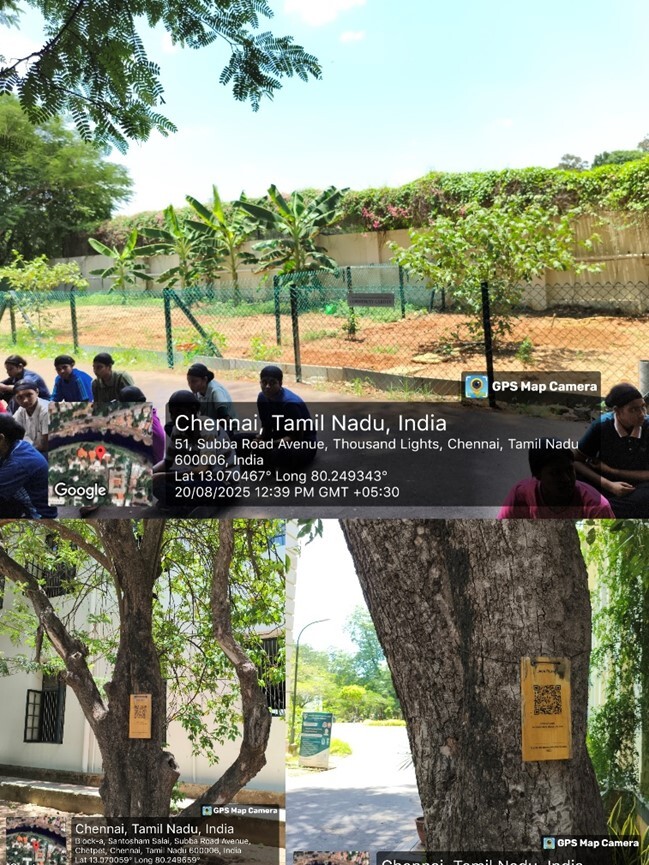
- Promotion of Environment-Related Activities on Campus - CES actively facilitates the preservation and enhancement of campus biodiversity through the management of green spaces and botanical gardens. The college campus hosts a diverse array of plant species, including century-old trees, medicinal plants, and native flora. With over 60 species, WCC uses technology such as QR codes for each tree. These QR codes provide detailed scientific and cultural information accessible via smartphones, integrating technology into traditional botanical education and enabling interactive learning. Additionally, a dedicated Community Garden allows students to engage in organic cultivation practices using sustainable techniques such as natural manure and pest control, promoting experiential learning.
- Green and Waste Management Initiatives - CES has implemented waste segregation systems with color-coded bins for biodegradable, recyclable, and non-recyclable waste, ensuring effective recycling and composting processes. The Centre has championed upcycling initiatives, creatively repurposing campus renovation waste and fallen trees into functional furniture such as chairs and tables thereby reducing landfill waste and procurement costs. Paper waste from administrative offices is collected and sent to recycling partners, creating a circular economy model.
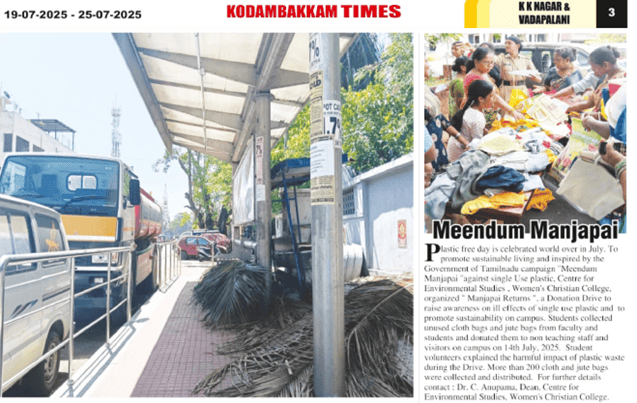
- Dissemination of Knowledge on Sustainable Use of Resources/ Organizing Workshops, Conferences, Drives, and Competitions - The CES integrates environmental education into the academic curriculum through interdisciplinary courses, workshops, and research activities. The Centre encourages projects and events that explore innovative sustainability solutions. CES actively organizes academic and community events to raise environmental awareness and encourage active participation. Events include workshops on environmental management, panel discussions on topics such as land restoration and drought resilience, and national symposiums on sustainable development. The Centre also conducts awareness drives and campaigns which involve both on-campus and off-campus community engagement. •International Plastic Bag FREE-DAY – Donate a cloth bag Drive titled “Manjapai Returns” was organised on 14/7/25 to reduce plastic waste and promote sustainability
- Creating an Attitudinal Change Among Women Regarding the Environment - CES focuses on empowering women to become proactive environmental stewards. This is achieved by embedding sustainability values across academic programs and campus culture. The Centre fosters attitudinal change through consistent engagement, education, and empowerment initiatives. Students are encouraged to adopt sustainable lifestyles, participate in green practices, and advocate for environmental protection beyond the campus. 'International Day of the World’s Indigenous People' was organized by Centre for Environmental Studies on 9th August, 2025 in our campus. To spotlight its theme, 'Indigenous People : Defending Rights, Shaping Futures- Spread the word! Let’s leave no one behind', traditional games were organized to acknowledge the indigenous people's significant role in sustaining the diversity of the world’s cultural and biological landscape.
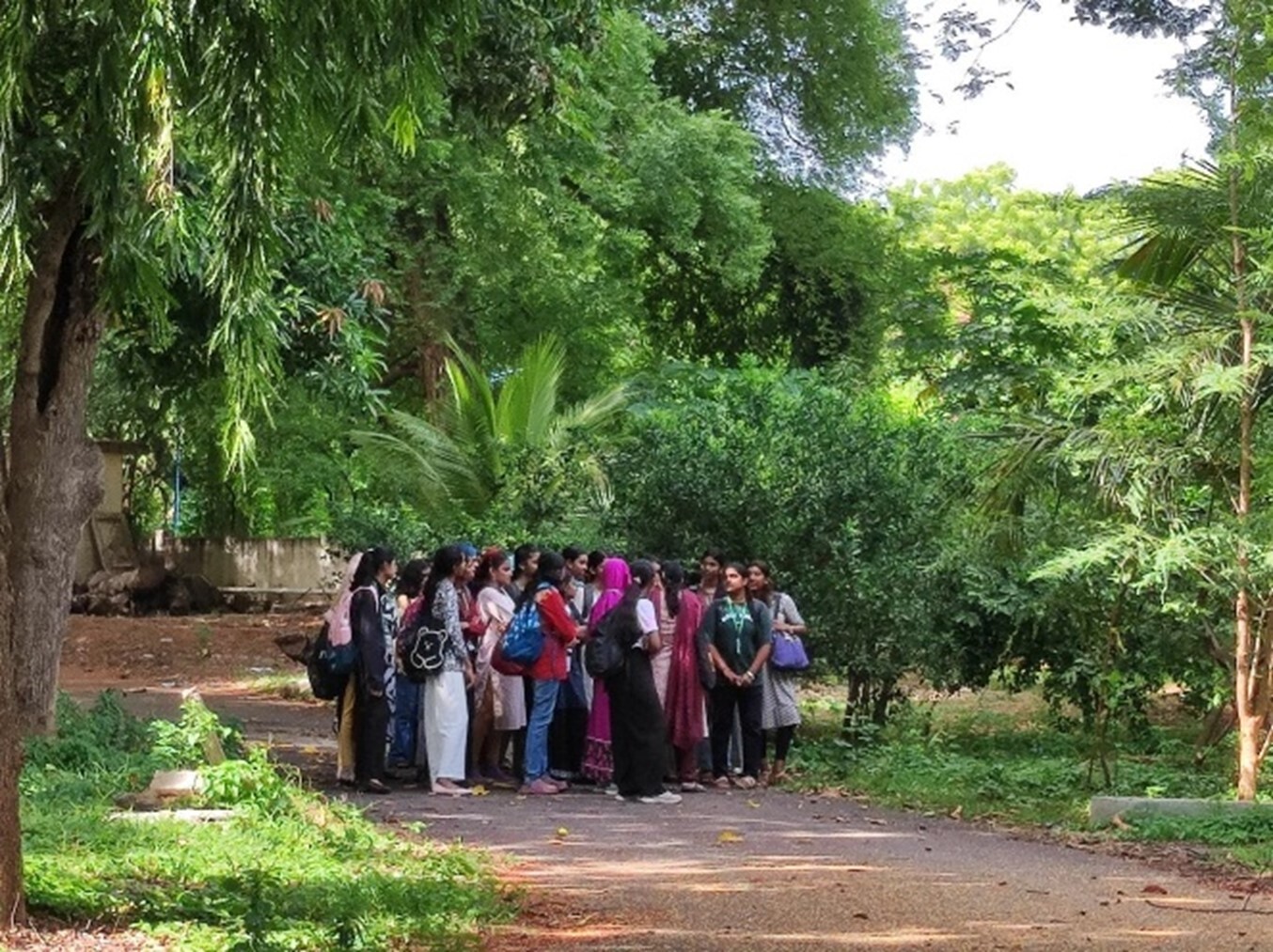
- Eco walk and Environmental Narrative - Students from different disciplines were taken on an Eco walk around campus in the month of August to explore the open space and the green grandeur of WCC to promote World Nature Conservation Day that falls on July 28th every year.
Eco-learning
- Promoting experiential learning: A method of acquiring knowledge, skills, and attitudes through direct, first-hand experience combined with reflection on that experience. This hands-on approach emphasizes active engagement in real-world situations to transform experience into knowledge through a continuous cycle of concrete experience, reflective observation, abstract conceptualization, and active experimentation. Examples include internships, field trips, service learning projects, undergraduate research, and simulations, which connect classroom theory to practical application and foster critical thinking.
- Waste bin color coding: It provides a visual system to segregate different types of waste, but it varies significantly by location and waste type.Household Waste:- Green: Biodegradable or organic waste, such as food scraps and garden debris.- Blue: Recyclable waste like paper, plastic, and metal, though this can vary.- Black: Non-recyclable, general waste.Medical waste color coding focuses on different levels of risk and treatment:- Yellow: Pathological and infectious waste, including human/animal anatomical waste, soiled linen, and lab waste.- Red: Contaminated recyclable waste and non-anatomical biological waste such as IV tubes and other hazardous waste.- White: Sharps and metallic objects, with sharp items placed in puncture-proof containers.- Purple: Hazardous waste contaminated with chemotherapy drugs (cytotoxic or cytostatic waste)
- Fallen trees into functional furniture such as chairs and tables: These can be transformed into beautiful, unique furniture through processes like portable sawmilling, which mills usable logs into lumber for custom pieces, and traditional woodworking techniques that preserve the natural beauty of the wood. This sustainable practice diverts wood from landfills or firewood, giving it new life as high-quality furniture, with local studios and individual artisans specializing in creating everything from live-edge tables to sculptural chairs from storm-downed or otherwise salvaged trees.
- Proactive environmental stewards: Active anticipation and prevention of ecological harm through forward-thinking actions, rather than simply reacting to existing problems.
- An Eco walk: Often guided, through a natural environment designed for educational, therapeutic, or recreational purposes, focused on exploring and learning about local ecology and the importance of ecological balance. It involves observing biodiversity, understanding ecosystems, promoting environmental awareness, and sometimes engaging in activities that foster a deeper connection with nature.
Eco-takeaways
This section refers to knowledge that one can implement in day-to-day life - Awareness activity on following events:
- International Day of the World’s Indigenous People' on 9th August- International Plastic Bag FREE-DAY