
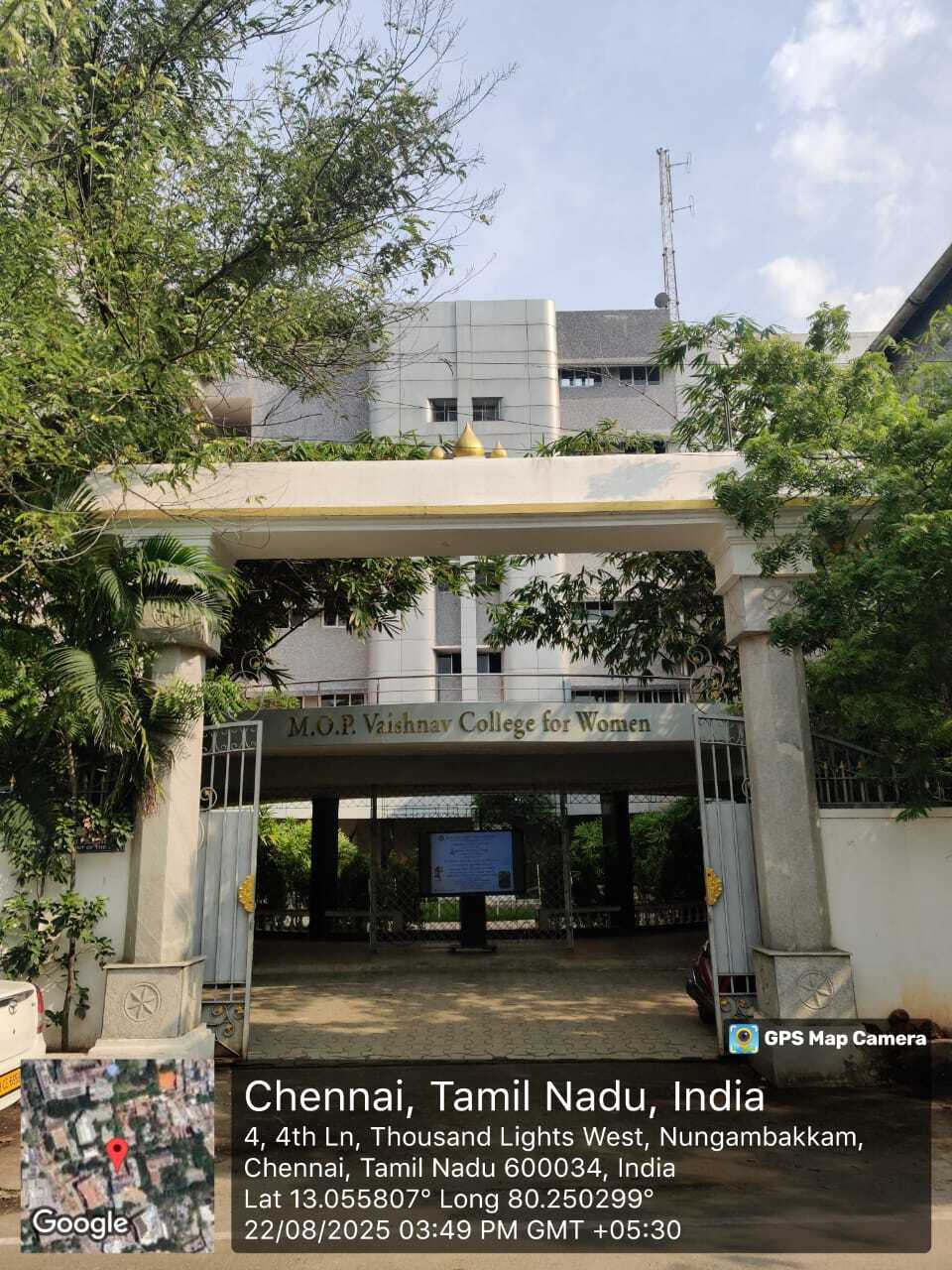
The famous architectural phrase "Less is More" is inextricably linked with the pioneering modernist architect Ludwig Mies van der Rohe. He popularized the idea of minimalism, simplicity, and elegance in design, believing that having only the essential things and stripping away superfluous decoration allows for a deeper focus on what truly matters. The title suits the M.O.P. Vaishnav College for Women who has proved that it is the efforts can bring about a huge impact even when space and other resources would be limited in nos.
Introduction
The campus literally has a small footprint, and likewise, constantly seeks ways to minimise its carbon footprint. At the same time, through its student ambassadors, the College tries to be the big change that environmental conservation efforts need to see today.
Specimen
This section supports the title statement and the interpretation.
Remarkable initiatives
The multi-dimensional initiatives taken have led multi-fold output as follows:
The multi-dimensional initiatives taken have led multi-fold output as follows:
1.Infrastructural Green Initiatives: - Plantation management - In lieu of floral bouquets to welcome speakers and other guests on campus, the College has started planting trees in honour of the guests, tying up with a tree-plantation agency for the initiative. The growth of the tree can be tracked on a video stream available through a QR code issued by the agency.
- Stakeholder management - Because change starts with the self, all students and staff members are encouraged to use a sustainable living tracker app called the SDG Power app, which uses the U.N. Sustainable Development Goals as a blueprint to track one’s everyday choices.
2. Energy and Water Conservation MeasuresM.O.P. Vaishnav takes a judicious approach to energy management, gradually attempting to push down energy use, while simultaneously seeking to transition as much load as possible to renewable sources of energy. Taking a 360-degree approach, the College also tries to conserve energy by making all infrastructure modifications with a view towards maximising the use of natural light and ventilation. A 45-kW solar system installed on a college campus generates approximately 45,000 kWh of clean energy annually. Besides, a switch to LED lights throughout campus has reduced electricity usage. Also, student leaders carry out awareness campaigns to remind the faculty and student body to be prudent in their electricity usage.
Situated in a city and state that have historically faced unstable water supply, M.O.P. understands very well the need for water conservation. The College has installed an extensive rainwater harvesting system in order to save and utilise water resources effectively. The open terrace, drainpipes and gutters are regularly cleaned and maintained to facilitate the rainwater collection process. The water collected through these channels is directed to an underground sump with a capacity of 1.5 lakh litres.
The College has undertaken to provide safe drinking water to all campus users through a reverse osmosis (RO) filtration system, and delivered through water stations on all floors of the building. However, one of the by-products of the RO process is the rejected water. The rejected water, while not potable, is safe for certain other uses. It is sent to the overhead tank, which holds 35,000 litres of water. This water is subsequently reused for a variety of functions, including the flushing of toilets.
3.Waste Management StrategiesAs an educational institution that houses around 4,000 students on campus, M.O.P. Vaishnav College consciously explores all possible means for the sustainable disposal of degradable and non-degradable wastes. The college has adopted measures to segregate waste at source. A set of three dustbins coloured in distinct colours, and clearly labelled, placed at strategic locations on campus, facilitate the first stage of waste segregation. Designated student bodies carry out periodic awareness programmes to sensitise students in these matters.
Since 2015, the College has maintained a Memorandum of Understanding with Well Being out of Waste, a project by the Indian conglomerate ITC Limited, for waste recycling. An average of around 1000 kg of paper waste is given for recycling every year. M.O.P. has a mandated that printouts should be taken only when absolutely necessary; where acceptable, printing should be done on both sides of paper sheets; and the unused side of pre-printed sheets ready to be discarded may be used to print content for rough use.
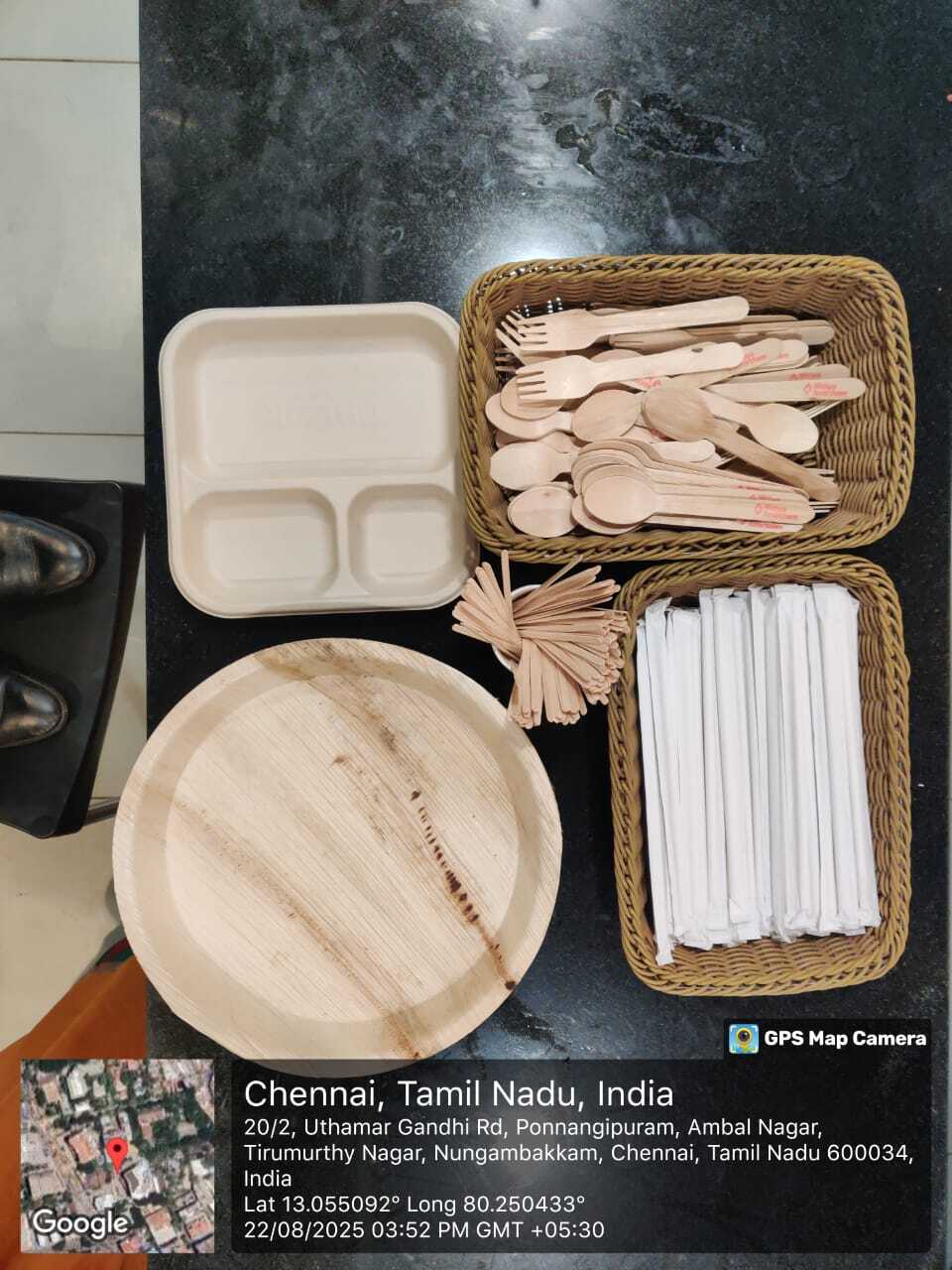
One part of the communication function of the College has been ported entirely onto a strategically placed digital notice board, eliminating the need to print plastic banners to inform the campus community regarding events. Similarly, all internal communication to students now goes out through a mobile app, and to staff, through Whatsapp group messages, thus eliminating paper circulars. The College has eliminated single-use plastic entirely on campus. As a result, the amount of plastic waste generated is near-zero.
Laboratory Waste: - Just-in-time inventory management helps minimise waste in the chemical labs.
- Disposal of chemical waste: Expired chemicals are stored in clearly labelled containers in a designated location that does not interfere with normal laboratory operations. They are periodically handed over to a chemical distributor / supplier for proper disposal.
- Disposal of waste generated during food microbiology practical: For safety reasons, all the petri-plates and conical flasks used for the inoculation and enumeration of the microorganisms are autoclaved (steam-sterilized) to inactivate the biological agents. The melted agar is allowed to solidify for disposal as a bio-waste, rather than dumped down the drain.
- Food waste from the canteen is composted in the campus compost pit.
- The campus cleaning crew uses non-toxic cleaning products so that harmful chemicals do not leach into the environment, soil and ground water.
E-Waste Management: Disposal of electronic waste is done with care, making use of specific disposal periods and drop-off points mandated by Chennai Corporation. Electronic goods are maintained and upgraded regularly to ensure longevity. Used printer cartridges, non-functional computers and used electronic items are sold to reputed agencies for safe recycling. When computers and accessories are upgraded, used computer systems in good condition are regularly donated to beneficiary partners such as the M.O.P. School, Triplicane; Chennai School, Kotturpuram; Lady Willington School, Triplicane; and the Assumption School, Nungambakkam.
4.Sustainable Transportation OptionsThe College does not operate transportation services. However, being located in the heart of Chennai city, it is well-connected by public transport. The vast majority of students use buses and trains to commute to college. The College has a long-standing agreement with the public transport operators, and procures discounted bus and train passes for students. Several private transport vans that seat 20-30 people also ply to the College, further reducing the use of private cars and two-wheelers. The College encourages students and staff to make sustainable choices by offering priority parking for e-vehicles A monthly ‘No Vehicle Day’ is actively observed, contributing to carbon emission reduction and keeping sustainability top-of-mind.
5.Innovative Practices in Curriculum that Promote SustainabilityM.O.P. Vaishnav College understands that it has an edge over many other organisations with regard to making a positive environmental impact. Certainly, the institution can do this by implementing environment-friendly policies and practices. But, since it is in a position to mould impressionable young minds, it can exploit the multiplier effect by having each student be an ambassador for best environmental practices far into the future. By far the smartest thing to do, therefore, is to include meaningful, effective content into the curriculum, that can truly engage students and help them internalise the tenets of sustainable living.
The College offers a mandatory environmental studies module, which includes guest lectures by conservationists and professionals in the field of ecology and sustainability, besides field visits to destinations in Chennai that can make an impact on young minds, such as the Pallikaranai Ecopark; Chetpet Ecopark; and the residence of Mr. D. Suresh (popularly known as Solar Suresh), which has been extensively outfitted with sustainable infrastructure. Environmental Studies lecturers have included experts such as Dr. K. Venkataraman, former director, Zoological Survey of India, and former secretary, National Biodiversity Authority; Mr. P. Natrajan, climate leader and founder, PUVI Earth Care Solutions, a consultancy; and Ms. Veeralakshmi, proprietor, Chennai Organic Farms.
6.Community and Student InvolvementStudent-power is central to M.O.P.’s strategy to create change and mould change-makers. The College has made sustainable development a recurring theme in its annual community service initiative, implemented by students. The community outreach efforts usually result in positive outcomes for the community as well as great learning for the students.
On another occasion, M.O.P. students, along with students from other colleges affiliated to the University of Madras, participated in a community awareness-building rally on the occasion of the birth anniversary of a former President of India, who advocated for environmental conservation and youth activism. The students obtained environmental conservation pledges from more than 500,000 people on a length of cloth, which was then used to sew sapling bags for more than 100,000 saplings that the volunteers planted around the city.
The M.O.P. unit of the National Service Scheme (NSS), a national-level scheme that encourages student volunteerism, takes part in frequent tree plantation drives in which they plant local tree species such as neem, mango, jamun and tamarind, and learn about their care and benefits. NSS volunteers – and occasionally other students as well – participate in beach clean-up and water-body restoration drives organised by volunteer organisations.
The students also run an SDG Club that organises awareness-raising events on campus on the sustainable development goals of the United Nations, and promotes the active use of the SDG Power app. Through M.O.P. Community Radio Station, the College also broadcasts and conducts outreach activities on environmental awareness.
Eco-learning
- Plantation management - In lieu of floral bouquets to welcome speakers and other guests on campus, the College has started planting trees in honour of the guests, tying up with a tree-plantation agency for the initiative. The growth of the tree can be tracked on a video stream available through a QR code issued by the agency.
- Stakeholder management - Because change starts with the self, all students and staff members are encouraged to use a sustainable living tracker app called the SDG Power app, which uses the U.N. Sustainable Development Goals as a blueprint to track one’s everyday choices.
2. Energy and Water Conservation Measures
3.Waste Management Strategies
- Just-in-time inventory management helps minimise waste in the chemical labs.
- Disposal of chemical waste: Expired chemicals are stored in clearly labelled containers in a designated location that does not interfere with normal laboratory operations. They are periodically handed over to a chemical distributor / supplier for proper disposal.
- Disposal of waste generated during food microbiology practical: For safety reasons, all the petri-plates and conical flasks used for the inoculation and enumeration of the microorganisms are autoclaved (steam-sterilized) to inactivate the biological agents. The melted agar is allowed to solidify for disposal as a bio-waste, rather than dumped down the drain.
- Food waste from the canteen is composted in the campus compost pit.
- The campus cleaning crew uses non-toxic cleaning products so that harmful chemicals do not leach into the environment, soil and ground water.
Eco-learning
Eco-takeaways
This section refers to knowledge that one can implement in day-to-day life - Visits to the following ecologically important places - Pallikaranai Eco park, Chetpet Eco park